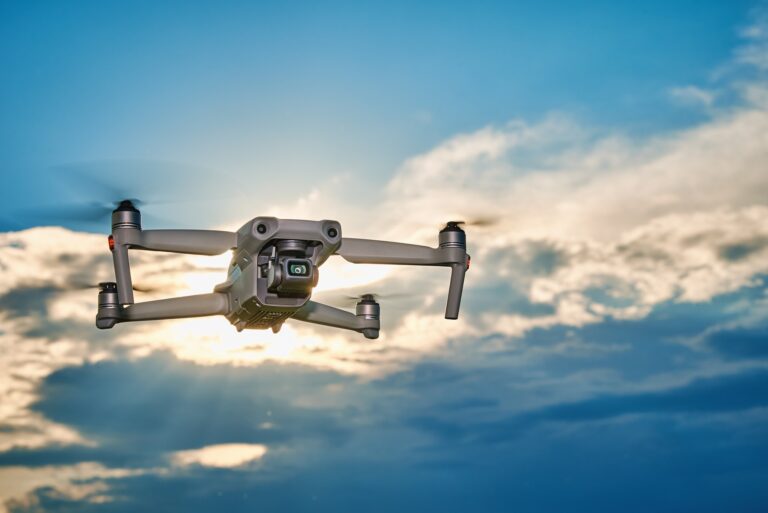
Aerial mapping and surveying use drone technology to capture high-resolution geographic data for construction, agriculture, land development, and infrastructure planning. Drone surveys provide faster coverage and improved accuracy compared to traditional ground-based methods.Aerial mapping also supports environmental monitoring, construction planning, and infrastructure development by delivering reliable visual data from large or difficult-to-access areas
Modern mapping drones collect detailed imagery, elevation models, and terrain measurements through automated flight paths and GPS positioning. These tools help professionals create precise maps, monitor site progress, and support data-driven planning.Regular drone surveys improve workflow efficiency and provide consistent project insights.
Drone survey methods are widely used for land inspections, topographic mapping, boundary analysis, and volumetric calculations. Accurate aerial data helps reduce manual effort while improving project efficiency and decision-making.

Discover how aerial mapping and drone surveying provide accurate land data, improve project planning, and support efficient site analysis across different industries and environments.
Drone mapping technology captures detailed aerial imagery and terrain data for land surveys, construction planning, and infrastructure projects. Accurate mapping improves site understanding and supports better decision-making..
Advanced drones use GPS positioning and automated flight paths to gather reliable survey information. These tools help create elevation models, topographic maps, and precise land measurements.
Aerial surveys reduce manual effort while increasing speed and coverage across large areas. Drone-based mapping supports project monitoring, boundary analysis, and long-term site management with accurate visual data.
Aerial mapping and survey methods help capture accurate land and geographic data across construction, agriculture, mining, and infrastructure projects. Drone-based surveys provide efficient coverage while reducing manual effort and improving overall project accuracy.Aerial mapping improves workflow efficiency by providing fast data collection across large or difficult-to-access areas.
Modern mapping drones use GPS positioning, automated flight paths, and high-resolution imaging to collect precise terrain information. These technologies support topographic mapping, elevation analysis, and detailed site measurements for better planning.Drone survey solutions support long-term site monitoring, progress tracking, and reliable project documentation
Drone surveying is widely used for land inspections, boundary mapping, volumetric calculations, and environmental monitoring. Accurate aerial data helps professionals analyze site conditions and make informed project decisions.